
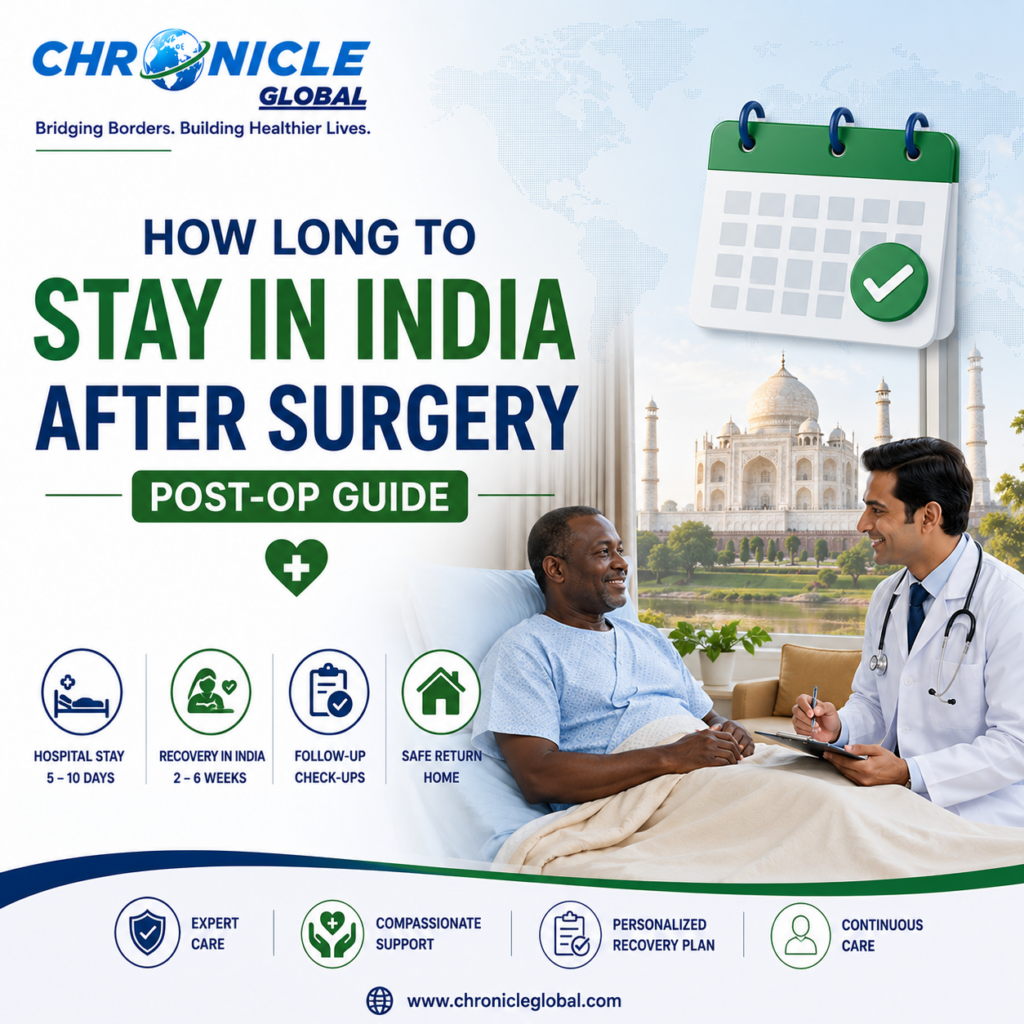
When planning a medical trip to India, one of the most common questions patients ask is: “Once my surgery is successfully completed, how soon can I fly back home?”
While it can be tempting to pack your bags as soon as you are discharged from the hospital ward, rushing your departure can compromise your recovery. Air travel changes ambient air pressure and requires long periods of sitting, which can create health risks for a body that is still healing. Planning a safe, phased post-operative timeline is an essential step in ensuring your long term health.
Let’s look at typical recovery timelines before flying, the health factors that determine your stay, and how to plan a comfortable post-op recovery.
Understanding the Difference Between Hospital Discharge and Flight Clearance
A successful medical trip requires understanding two distinct recovery milestones:
-
Hospital Discharge: This occurs when your surgical team confirms you no longer require acute, 24-hour nursing supervision or intravenous medications. You are free to leave the hospital building and move to a nearby hotel room.
-
Fit-to-Fly Clearance: This is a separate, formal medical approval issued by your attending physician. It confirms that your incisions have closed, your vital signs are stable, and your body can safely handle the changes in cabin pressure and long periods of sitting required during international flights without risk of complications like deep vein thrombosis (DVT).
[Surgery Completed] ➔ [Hospital Discharge] ➔ [Hotel Recovery Phase] ➔ [Fit-to-Fly Clearance]General Timelines Across Major Medical Specialties
Your required post-operative stay in India depends heavily on the complexity of your procedure. Here is a general baseline for post-discharge hotel stays before receiving flight clearance:
┌────────────────────────────────────────────────────────┐ │ Required Post-Op Stays Before International Flights │ └───────────────────────────┬────────────────────────────┘ │ ┌────────────────────────┼────────────────────────┐ ▼ ▼ ▼ ┌─────────────────┐ ┌─────────────────┐ ┌─────────────────┐ │ Routine/Laparo │ │ Major Ortho/Card│ │ Organ Transplant│ │ (5 - 7 Days) │ │ (10 - 14 Days) │ │ (4 - 12 Weeks) │ └─────────────────┘ └─────────────────┘ └─────────────────┘1. Routine or Minimally Invasive Procedures (5 to 7 Days)
For surgeries like advanced laparoscopic interventions, routine bariatric procedures, or simple cosmetic adjustments, your post-discharge stay is typically short. Doctors usually issue a fit-to-fly clearance within 5 to 7 days, following a final check of your incisions.
2. Major Orthopedic or Cardiac Interventions (10 to 14 Days)
Complex procedures like total knee replacements, spinal fusions, or open-heart bypasses (CABG) require a longer recovery window. You should plan for a 10-to-14-day post-discharge stay. This window is essential for physical therapy sessions, wound dressing management, and monitoring to prevent blood clots before your flight.
3. Organ Transplants and Bone Marrow Procedures (4 to 12 Weeks)
Because organ transplants (such as liver or kidney transplants) and bone marrow transplants require suppressing the immune system to prevent rejection, patients must stay close to their hospital for long-term monitoring. You should plan for an extended on-ground stay ranging from 1 to 3 months to ensure your body safely accepts the transplant before traveling home.
Key Factors That Determine Your Post-Op Stay
Your surgical team evaluates several clinical markers before signing your travel clearances:
-
Wound Healing: Your incisions must be completely closed, with all surgical staples or sutures safely removed, showing no signs of redness or fluid retention.
-
Mobility Metrics: For orthopedic treatments, you must prove you can walk short distances unassisted and move comfortably through standard airport environments.
-
Pain Management: Your recovery must progress to the point where pain can be managed easily with standard oral medications rather than intravenous options.
How Chronicle Global Supports Your Recovery Phase
Managing your recovery timeline, booking hotels, and arranging follow-up appointments can be challenging when you are focusing on healing. Chronicle Global handles these logistics through our structured 7-Step Medical Journey Model:
[1. Inquiry] ➔ [2. Quote] ➔ [3. Hospital Match] ➔ [4. Visa Setup] ➔ [5. Intake] │ [7. Long-Term Telemedicine] ◄────── [6. Managed Recovery & Lodging] ◄───┘Through our High-Touch Care Shield, we manage your entire recovery environment:
-
Handpicked Accommodations: During Step 6 (Recovery Management), we place you and your family in comfortable partner hotels or serviced apartments located right next to your hospital campus. This minimizes travel stress during your follow-up checkups.
-
Continuous On-Ground Support: Your assigned, native-speaking case manager coordinates all follow-up appointments, tracks your medication adjustments, and secures your official fit-to-fly documentation.
-
Our Financial Guarantee: Chronicle Global’s strict Zero-Hidden-Cost Promise means your initial pre-travel quote covers your essential travel, transport, and lodging logistics, protecting you from unexpected upcharges or fine-print fees.
-
Long-Term Telemedicine Continuity: Our care doesn’t end when your plane takes off. Through Step 7, we establish direct online telemedicine channels, allowing your doctors in India to monitor your health and coordinate care with your local physician back home.
Prioritize your health by avoiding a rushed recovery. Contact the patient coordination desk at Chronicle Global today to build a safe, fully supported treatment blueprint.



Add a comment