
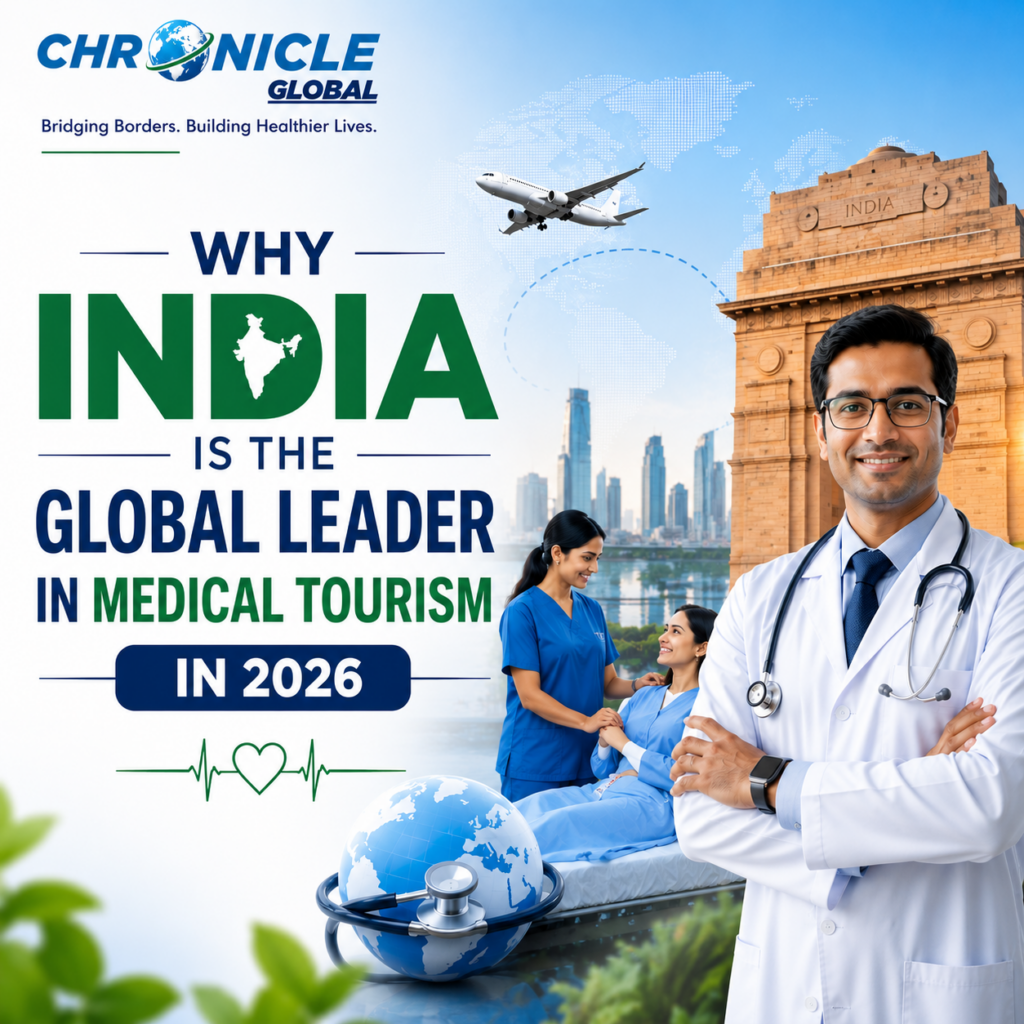
The landscape of global healthcare has shifted permanently. For decades, patients requiring complex surgical interventions, advanced cancer care, or multi-organ transplants automatically looked toward Western Europe or North America. But a high-quality global care economy has decentralized medicine. In 2026, India stands as the undisputed global leader in medical value travel (MVT), welcoming hundreds of thousands of international patients each year.
This leadership isn’t just based on affordability. It represents a rare combination of clinical infrastructure, elite medical talent, rapid technology adoption, and a highly organized patient support ecosystem. If you or a loved one are evaluating treatment options outside your home country, here is an objective look at why India sets the global benchmark for medical tourism in 2026.
The Convergence of World-Class Clinical Systems
International patients often worry about safety and standards when traveling abroad for surgery. India has addressed this head-on by building an extensive network of internationally accredited medical institutions.
Major metropolitan regions across India—including New Delhi, Mumbai, Bengaluru, Chennai, and Gurgaon—are home to massive hospital conglomerates such as Max Healthcare, Medanta, Apollo, and Fortis. These multi-specialty hubs are strictly governed by both National Accreditation Board for Hospitals (NABH) mandates and Joint Commission International (JCI) certifications.
[Patient Inflow] ➔ [Strict JCI/NABH Standards] ➔ [Advanced Specialized Units]When walking into a JCI-accredited facility in India, you are entering a hospital that adheres to the exact same safety, hygiene, and clinical quality control frameworks as top-tier medical centers in London or New York. From ultra-clean laminar airflow systems in operating theaters to specialized isolation units for bone marrow transplant recoveries, the physical environment matches or exceeds global standards.
Technological Edge: Artificial Intelligence and Robotic Surgery in 2026
Indian healthcare has leapfrogged traditional paradigms by aggressively deploying cutting-edge technologies. In 2026, India boasts one of the world’s highest concentrations of advanced robotic surgical platforms, including the Da Vinci and Hugo RAS systems.
┌────────────────────────────────────────────────────────┐ │ Advanced Tech Adoption in Indian Healthcare (2026) │ └───────────────────────────┬────────────────────────────┘ │ ┌─────────────────────────┼─────────────────────────┐ ▼ ▼ ▼ ┌─────────────────┐ ┌─────────────────┐ ┌─────────────────┐ │ Robotic Systems │ │ AI Diagnostics │ │ Linear Accel. │ │ (Da Vinci/Hugo) │ │ (Rapid Triage) │ │ (Edge/CyberKnife)│ └─────────────────┘ └─────────────────┘ └─────────────────┘These automated systems allow Indian surgeons to execute highly complex procedures—such as prostatectomies, deep-tissue neurosurgeries, and minimally invasive cardiac valve reconstructions—with absolute anatomical precision. For the patient, this high-tech focus translates into:
-
Significantly smaller incisions and minimal blood loss.
-
Reduced post-operative pain and lower infection risks.
-
Compressed recovery timelines, allowing international travelers to safely fly back home much sooner.
Furthermore, oncology centers in India now feature next-generation linear accelerators, including CyberKnife and Edge radiosurgery systems. These technologies allow doctors to target complex tumors with sub-millimeter precision, sparing the surrounding healthy tissue.
High-Value Economics: Up to 80% Cost Savings Without Compromise
It is impossible to discuss India’s leadership in medical tourism without highlighting the remarkable cost differential. However, it is vital to understand why healthcare in India is so cost-effective. The lower price tag is not the result of cutting corners; rather, it is driven by lower localized operational overhead, favorable currency exchange dynamics, and the high volume of procedures executed by Indian hospitals daily.
Consider a baseline comparison of major medical procedures in 2026:
| Medical Procedure | Average Cost in US / UK | Average Cost in India | Average Cost Savings |
| Coronary Artery Bypass (CABG) | $75,000 – $120,000 | $5,500 – $8,000 | 85% – 90% |
| Knee Replacement (Single) | $35,000 – $50,000 | $4,000 – $6,000 | 80% – 85% |
| Liver Transplant | $300,000 – $450,000 | $28,000 – $35,000 | 90% |
| Bone Marrow Transplant (BMT) | $150,000 – $250,000 | $18,000 – $30,000 | 85% |
For an international family paying out-of-pocket, this price difference is life-changing. It makes high-end, tertiary interventions accessible without forcing families into long-term financial distress.
Bridging the Transition: The Chronicle Global Care Shield
While the clinical and economic arguments for India are clear, traveling to a new country for critical care can feel overwhelming. Language barriers, unfamiliar transport systems, and confusing visa documentation often cause unnecessary stress.
This is exactly where Chronicle Global steps in. We act as your dedicated, on-ground healthcare facilitator, eliminating the standard points of friction through our structured 7-Step Medical Journey Model:
[1. Inquiry & Free Opinion] ➔ [2. Fixed Estimation] ➔ [3. Hospital Selection] │ [6. Managed On-Ground Care] ◄── [5. Priority Intake] ◄── [4. Visa Execution] │ [7. Post-Return Continuity]Through our High-Touch Care Shield, we ensure that language is never an obstacle to your health. We assign certified, on-ground medical translators fluent in Swahili, French, and Arabic directly to our patients’ bedsides. This guarantees clear, open communication between you, your family, and your Indian clinical team.
Furthermore, our Zero-Hidden-Cost Promise provides total financial peace of mind. The all-inclusive cost estimate formulated during your Step 2 planning phase is exactly what you are invoiced upon hospital discharge. We actively block unexpected billing spikes, surprise translation surcharges, or unplanned travel fees.
Taking the First Step Toward Recovery
India’s global leadership in 2026 is built on a simple foundation: offering patients access to advanced medical technology, internationally celebrated doctors, and exceptionally high surgical success rates, all within an affordable framework.
Don’t let local medical delays or rising costs compromise your health parameters. Connect with the international intake desk at Chronicle Global today. Submit your current clinical reports for a completely free secondary medical evaluation from India’s top super-specialists, and let us build a clear, stress-free path to your recovery.



Add a comment