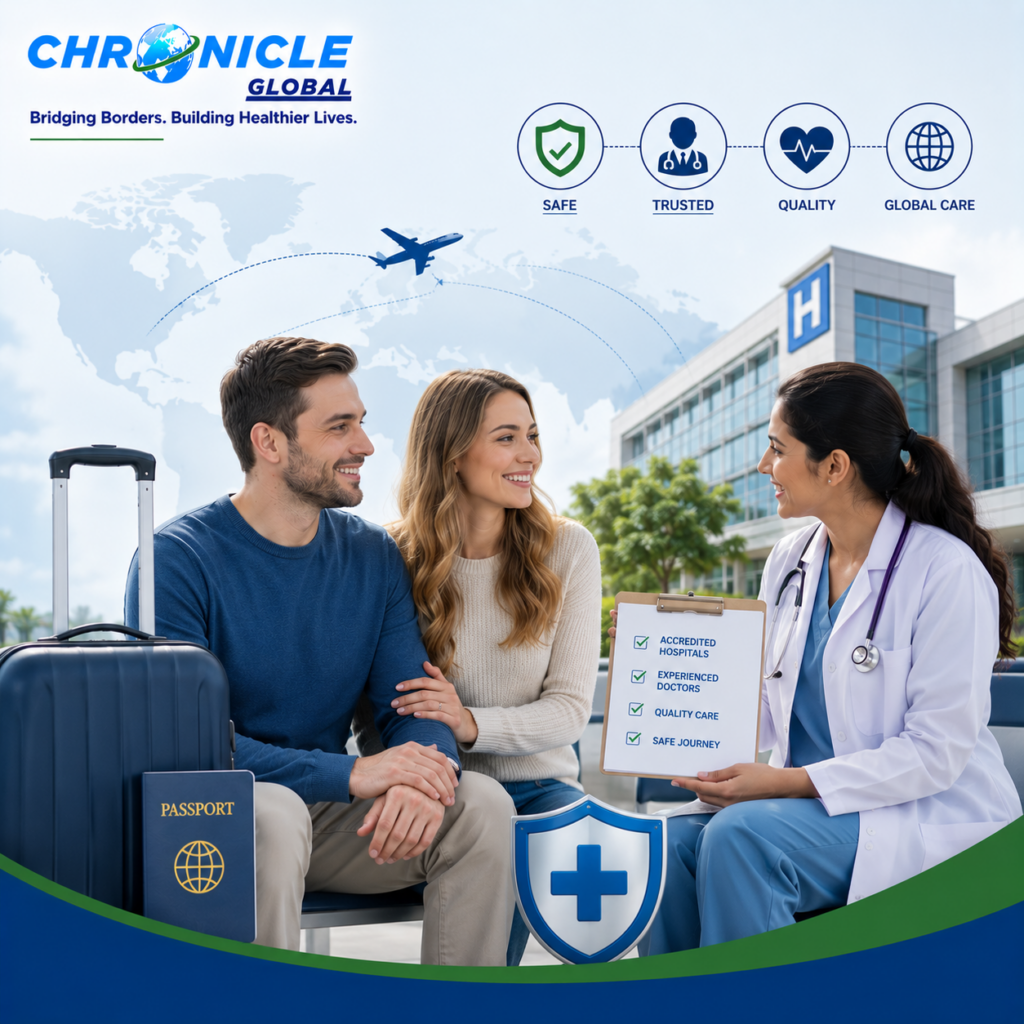
When a medical condition requires major treatment, the idea of traveling to a foreign country for surgery can bring up completely natural anxieties. The most fundamental question any patient or family member asks is simple: Is medical tourism safe?
The honest answer is that medical tourism is as safe as the planning, vetting, and professional safeguards you put behind it. Traveling across borders for surgery is a serious clinical undertaking, not a standard holiday. When navigated through a structured, verified pathway, international medical value travel gives you direct access to world-class safety environments, ultra-modern technologies, and clinical outcomes that meet or exceed Western standards.
To protect your health, you must look past basic marketing claims and understand the specific protocols that define a safe medical journey.
Evaluating Clinical Safety: The Power of Accreditations
You should never evaluate an international hospital based on its website layout or room photos. Safe medical travel relies on objective, independent clinical audits.
[Hospital Operational Quality] ➔ [Rigorous Independent Audit] ➔ [JCI / NABH Quality Seals]Before considering any healthcare facility abroad, confirm it holds active, verified accreditations from recognized bodies:
-
Joint Commission International (JCI): This is the gold standard for global healthcare auditing. A JCI-accredited facility—such as the elite networks in India—adheres to the exact same surgical safety, medication tracking, and infection prevention frameworks as the top academic medical centers in the United States and Europe.
DOCX -
NABH (National Accreditation Board for Hospitals): This represents the highest tier of national clinical quality governance in India, ensuring strict adherence to standardized intensive care management, blood bank safety, and patient rights.
When you choose an accredited institution, you are entering an environment structurally engineered to minimize risks—from mandatory pre-incision surgical checklists to advanced laminar airflow systems that keep operating room infection rates near zero.
Identifying and Managing Travel-Specific Risks
Clinical safety in medical tourism extends far beyond the operating room; it requires careful management of the travel process itself.
┌────────────────────────────────────────────────────────┐ │ Critical Cross-Border Safety Elements │ └───────────────────────────┬────────────────────────────┘ │ ┌──────────────────┼──────────────────┐ ▼ ▼ ▼ ┌──────────────────┐┌──────────────────┐┌──────────────────┐ │ Safe Post-Op ││ Professional ││ Strict Legality │ │ Flight Buffers ││ Medical Intake ││ via M-Visa Path │ └──────────────────┘└──────────────────┘└──────────────────┘1. The Risk of Rushing Your Flight Home
Long flights place specific physical stresses on a body that is actively healing. The combination of cabin pressure changes, mild dehydration, and long periods of sitting can increase the risk of deep vein thrombosis (DVT) or blood clots if a patient travels too soon. A safe journey requires strict adherence to post-operative recovery timelines. Routine keyhole procedures typically require a 5-to-7-day on-ground wait, while major open cardiac or joint surgeries demand 10 to 14 days before a physician issues a formal “Fit-to-Fly” certificate.
2. Eliminating Language Barriers for Patient Consent
True clinical safety requires clear, open communication. Misunderstanding a doctor’s pre-operative instructions or post-operative medication schedule introduces real risk. Vetted care systems address this by placing professional medical interpreters directly at the patient’s bedside to ensure absolute clarity during clinical rounds.
3. Legal Protection and Compliance
Safety also includes legal peace of mind. It is illegal to enter a country like India on a standard tourist visa for planned major healthcare. Safe pipelines require an official Medical Visa (M-Visa), backed by a stamped invitation letter from an accredited hospital, ensuring your legal protection throughout your stay.
The Chronicle Global Quality Shield
At Chronicle Global, we believe that patient safety is an absolute responsibility. We eliminate the uncertainty of international healthcare planning by managing your entire treatment lifecycle through our structured 7-Step Medical Model.
From our corporate headquarters in Greater Noida, India, our clinical intake teams evaluate your complete digital medical file. We match your records exclusively with senior specialists who hold advanced super-specialty degrees and operate within elite, JCI-accredited networks like Max Healthcare, Medanta, Fortis, and Apollo.
[Inquiry File Audit] ➔ [Locked Cost Guarantee] ➔ [Accredited Institution Match] │ [Bedside Concierge Support] ◄── [Priority Intake Route] ◄── [M-Visa Validation]We protect your recovery through our core care shields:
-
The Linguistic Shield: We remove communication risks by assigning certified, on-ground medical translators fluent in Swahili, French, and Arabic directly to your bedside.
DOCX -
The Financial Shield: Financial unexpectedness can complicate a patient’s recovery. Through our Zero-Hidden-Cost Promise, your initial pre-travel quote covers your essential surgical care and baseline travel logistics, with absolutely no surprise upcharges or hidden fees upon discharge.
DOCX
Your health is too important to leave to chance or unverified brokers. Contact Chronicle Global today to receive a vetted, secure medical travel blueprint.


Add a comment