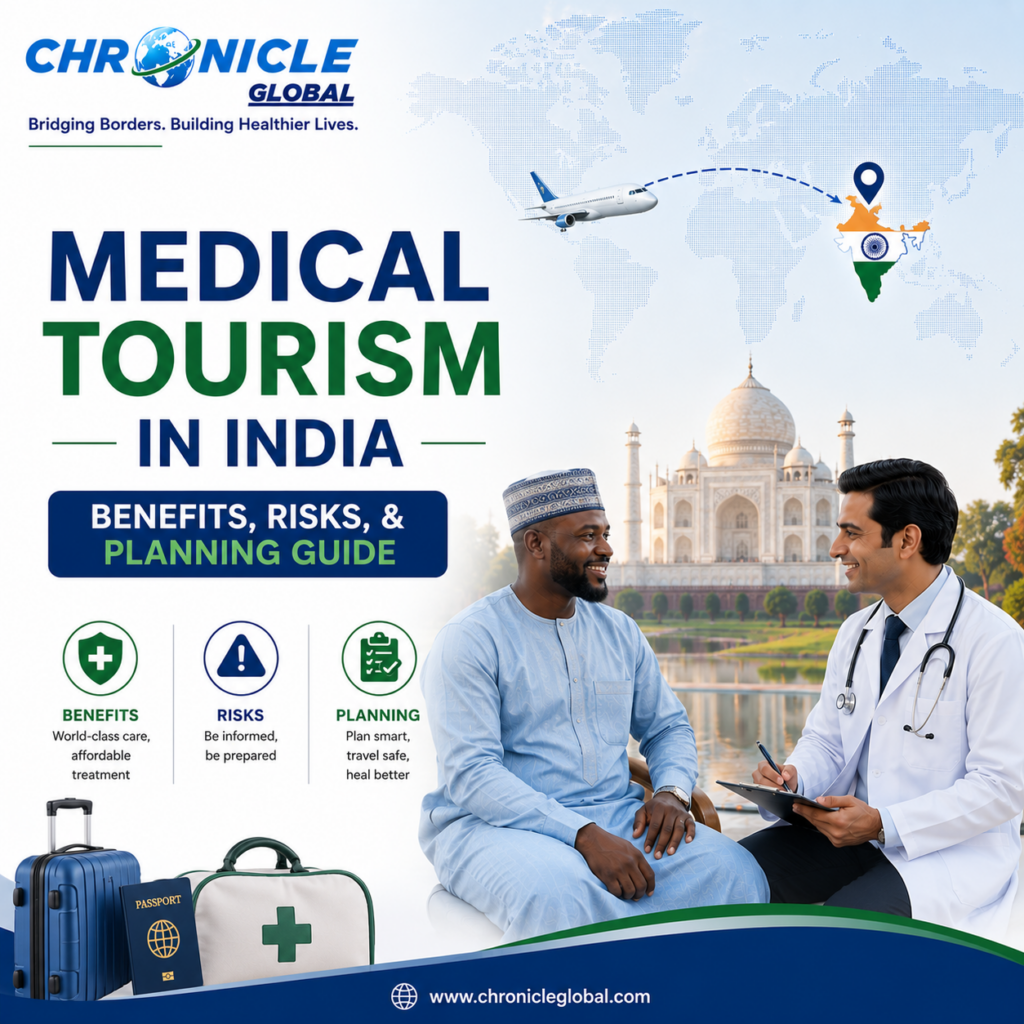
Making the choice to cross international borders for medical care is rarely simple. It is a decision typically born out of necessity—whether due to long waiting lists at home, high local treatment costs, or a lack of specialized advanced equipment in your home country. India has firmly established itself as a leading destination for this type of care. However, a successful medical trip requires looking past marketing headlines to objectively examine both the benefits and the real risks involved.
An honest, balanced view of the Indian medical landscape can help you make an informed decision and provide a practical guide for organizing your medical travel safely.
The Benefits: Why Millions Choose India
India’s position in the global healthcare space is built on structural advantages that offer clear benefits to international patients:
-
Elite Clinical Expertise: Indian doctors frequently undergo training or hold fellowships at major medical institutions in the US, UK, or Europe. Sub-specialists in areas like oncology, neurosurgery, and multi-organ transplants routinely handle a high volume of complex cases, building deep clinical experience.
-
Advanced Medical Technology: Major multi-specialty hospitals in India feature the latest medical infrastructure, including Da Vinci robotic surgical systems, CyberKnife radiation therapy, and advanced diagnostic imaging.
-
Significant Cost Savings: Procedures in India generally cost 60% to 85% less than identical treatments in Western nations or the UAE. This affordability is driven by lower localized operational overhead and living expenses, not by lowering care standards.
-
Immediate Treatment Access: For conditions where delays can worsen outcomes—such as aggressive cancers or severe cardiac blocks—Indian hospitals typically offer zero-wait-time protocols, allowing patients to begin treatment almost immediately upon arrival.
The Risks: What You Must Prepare For
Medical travel is a serious medical undertaking, not a vacation. Understanding the inherent risks allows you to plan effectively and prevent potential complications:
1. Travel-Related Fatigue and Complications
Long-haul flights can place stress on a compromised body. For patients traveling after major surgery, sitting for extended periods increases the risk of deep vein thrombosis (DVT) or blood clots if proper travel clearances are not secured.
2. Fragmentation of Follow-Up Care
Once a patient returns home, the continuity of care can break down if their local physician is not provided with detailed surgical records, discharge summaries, or direct communication lines with the operating surgeon in India.
3. Exposure to Hidden Costs
Working with unverified, independent brokers can expose families to unexpected financial demands, fine-print upcharges, or surprise fees for essential services like medical translation or local transport.
How to Plan a Safe Medical Journey
To manage these risks and ensure a safe recovery, your planning should follow a structured, step-by-step process:
[Gather Vetted Reports] ➔ [Verify Hospital Accreditations] ➔ [Secure Clear Pricing] ➔ [Arrange Post-Op Care]Step 1: Secure Vetted Diagnostics
Compile all recent blood work, high-resolution scans, and your local doctor’s diagnostic summary into clean digital files. Never plan travel based on outdated medical records.
Step 2: Verify Institutional Accreditations
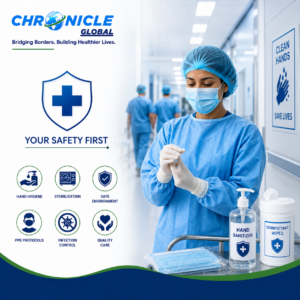
Ensure your chosen hospital holds an active certification from JCI (Joint Commission International) or a full accreditation from NABH (National Accreditation Board for Hospitals). These certifications ensure the facility adheres to strict international hygiene and safety standards.
Step 3: Require a Detailed Financial Estimate
Demand a comprehensive, written cost breakdown that includes the surgical fees, hospital room stay, essential medications, and implant costs before booking your travel.
The Chronicle Global Approach to Patient Safety
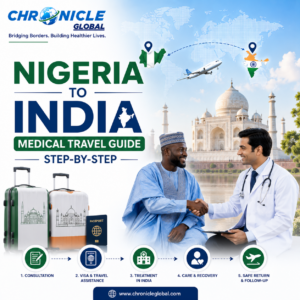
At Chronicle Global, we built our 7-Step Medical Journey Model specifically to protect international families from the risks common in cross-border healthcare.
[1. Free Expert Review] ➔ [2. All-Inclusive Quote] ➔ [3. JCI Facility Match] │ [6. Bedside Concierge Support] ◄── [5. Priority Intake] ◄── [4. M-Visa Setup] │ [7. Long-Term Telemedicine Continuity]Through our High-Touch Care Shield, we verify that every patient is matched exclusively with elite, certified hospital networks like Max, Medanta, Fortis, or Apollo. We address language barriers directly by assigning native, on-ground interpreters fluent in Swahili, French, and Arabic straight to our patients’ bedsides.
Most importantly, our Zero-Hidden-Cost Promise ensures complete financial transparency. The fixed quote formulated during your pre-travel planning phase is exactly what you are invoiced upon discharge, completely isolating your family from unexpected upcharges or surprise fees. We manage your logistical details so you can focus entirely on your physical recovery.


Add a comment