
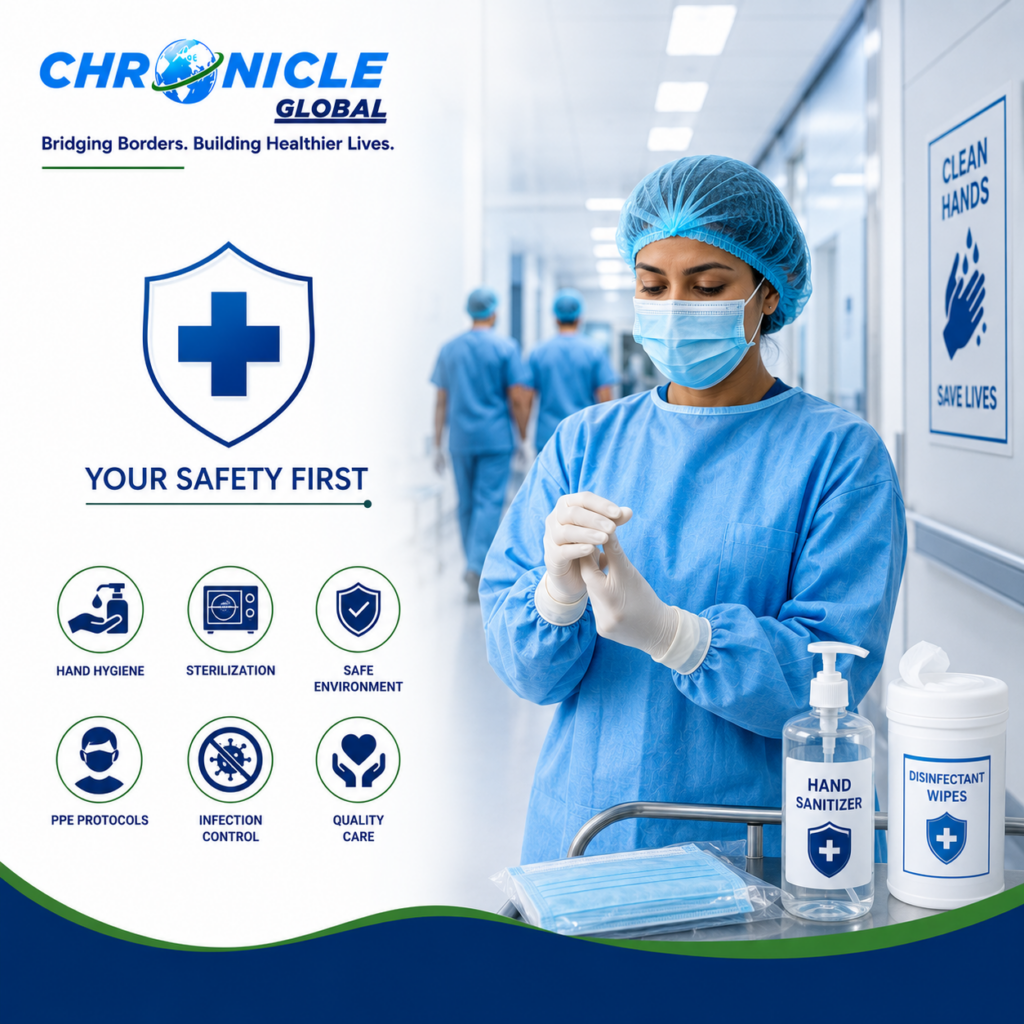
When preparing for complex surgery abroad, evaluating a hospital’s structural safety protocols is just as critical as researching your surgeon’s experience. For international patients, a key measure of hospital quality is its Infection Control Practices. Preventing hospital-acquired infections (HAIs) is essential to achieving a safe, successful surgical recovery.
Leading multi-specialty hospitals in India operate under world-class clinical standards. Let’s look at the specific sanitation, air filtration, and sterilization frameworks that top accredited Indian facilities use to protect patient health.
The Regulatory Framework: JCI and NABH Protocols
International patients should prioritize hospitals that hold active JCI (Joint Commission International) or full NABH certifications. These accreditations ensure that a medical institution follows strict guidelines for patient safety and clinical hygiene.
┌────────────────────────────────────────────────────────┐ │ Strict Infection Prevention Infrastructure │ └───────────────────────────┬────────────────────────────┘ │ ┌─────────────────────────┼─────────────────────────┐ ▼ ▼ ▼ ┌──────────────────┐ ┌──────────────────┐ ┌──────────────────┐ │ Laminar Airflow │ │ Zero-Tolerance │ │ Specialized ICU │ │ & HEPA Filtration│ │ Sterilization │ │ Isolation Wings │ └──────────────────┘ └──────────────────┘ └──────────────────┘A core requirement of these quality frameworks is a comprehensive infection control strategy that monitors several areas:
1. Ultra-Clean Operating Theaters with HEPA Filtration
Top Indian hospital networks—including Max, Medanta, Fortis, and Apollo—use specialized Laminar Airflow Systems in their surgical suites. These systems pass air through high-efficiency particulate air (HEPA) filters, which refresh the air in the operating room up to 20 times per hour. This continuous filtration removes airborne contaminants, keeping the surgical field sterile.
2. Standardized CSSD (Central Sterile Services Department)
Vetted facilities use automated Central Sterile Services Departments to clean and prepare all surgical tools. Every instrument undergoes multi-stage cleaning, thermal disinfection, and steam sterilization. The process is tracked with digital barcoding to verify that no tool enters an operating room without completing full sterilization.
3. Strict Isolation and Environment Controls
For treatments that lower a patient’s immune defenses—such as bone marrow transplants (BMT) or organ transplant recoveries—accredited Indian hospitals use positive-pressure isolation rooms. These rooms prevent outside, unfiltered air from entering the patient’s space, protecting them from airborne pathogens during early recovery.
Evaluating Hospital Safety Metrics
When researching potential hospitals for your treatment, you or your care coordinator can look for specific, recorded safety indicators:
[Check SSI Tracking Metrics] ➔ [Confirm WHO Safety Compliance] ➔ [Verify Active Accreditations]-
Surgical Site Infection (SSI) Rates: Vetted institutions track SSI rates closely, with top facilities maintaining rates well below global averages.
-
Hand Hygiene Compliance: Accredited hospitals run continuous monitoring programs to ensure all clinical staff follow strict hand sanitation rules before and after patient contact.
-
WHO Surgical Safety Checklist: Operating teams use a mandatory verbal verification checklist before, during, and after surgery to confirm patient identity, procedural details, and instrument counts.
How Chronicle Global Coordinates Vetted Care
Managing your own clinical research, verifying hospital hygiene data, and auditing safety metrics can be difficult when managing a serious health condition. Chronicle Global handles these safety verifications for you by working exclusively with top-tier, certified hospital networks.
[Inquiry & Case Triage] ➔ [Fixed Price Confirmation] ➔ [Match with Certified Hospital] │ [Bedside Case Coordinator] ◄── [Priority Care Intake] ◄── [M-Visa Coordination] │ [Long-Term Telemedicine Continuity]Through our 7-Step Medical Journey Model, we manage your placement details. During Step 3 (Hospital Selection), we match your records with an accredited institution that has a proven track record of safety in your specific specialty area.
We protect your trip through our core care shields:
-
The Financial Shield: Our Zero-Hidden-Cost Promise ensures that your initial quote covers your entire treatment timeline at these top-tier centers, protecting your family from unexpected upcharges or hidden fees.
-
The Linguistic Shield: To ensure complete clarity, we assign native, on-ground interpreters fluent in Swahili, French, and Arabic straight to your bedside to support you through medical rounds and family updates.
Prioritize your safety by choosing a planned, secure care pipeline. Contact Chronicle Global today to connect with fully verified, accredited medical centers in India.
Add a comment