
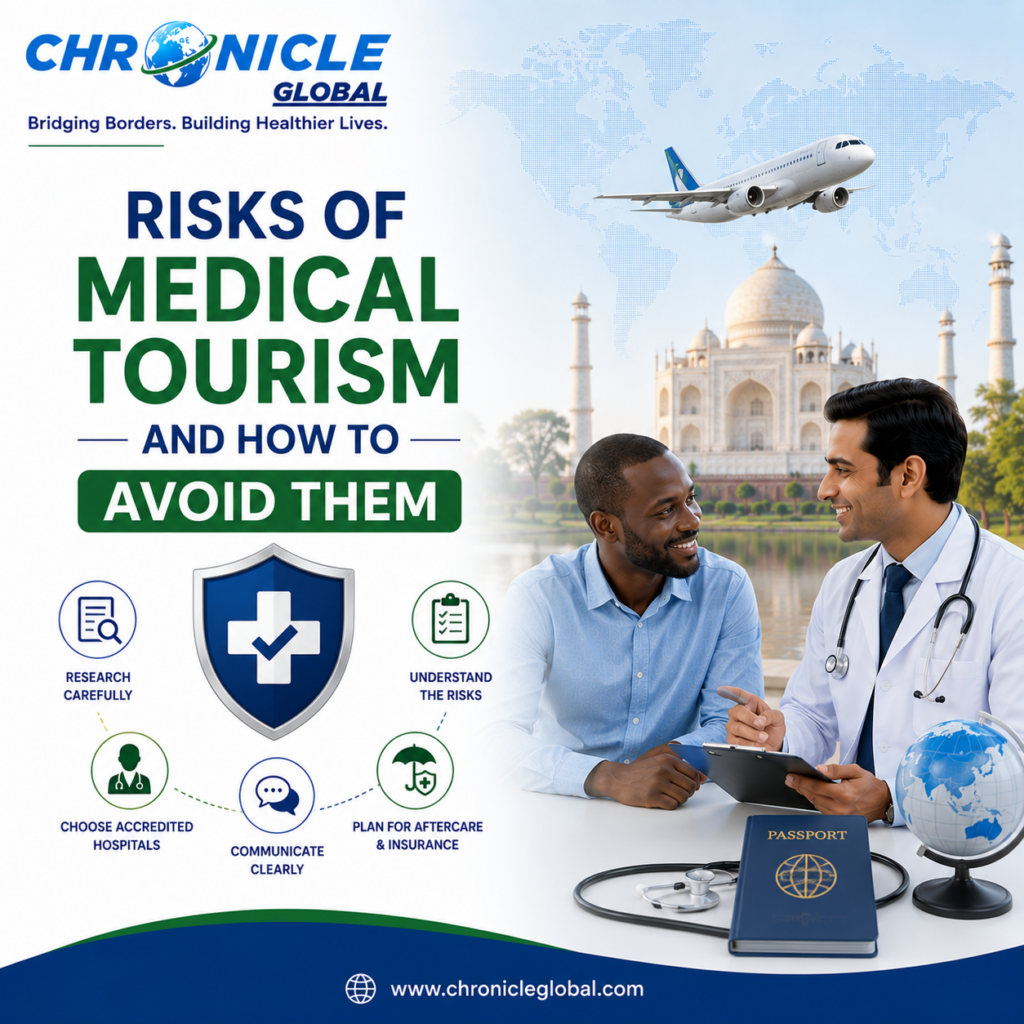
International medical travel can provide access to advanced treatments and specialized clinical infrastructure that may not be available locally. However, traveling across borders for complex surgery carries real risks that require careful management. Treating cross-border healthcare like a standard consumer transaction can expose patients to preventable clinical and financial complications.
To ensure a safe and successful recovery, patients and their families should understand the primary risks of medical travel and follow practical strategies to avoid them.
Real Risks in Cross-Border Healthcare
┌────────────────────────────────────────────────────────┐ │ Primary Risks in International Medicine │ └───────────────────────────┬────────────────────────────┘ │ ┌──────────────────┼──────────────────┐ ▼ ▼ ▼ ┌─────────────────┐┌─────────────────┐┌─────────────────┐ │ Travel-Induced ││ Care Isolation ││ Financial Risk │ │ DVT / Clots ││ & Broken Loops ││ & Hidden Costs │ └─────────────────┘└─────────────────┘└─────────────────┘1. Travel-Induced Deep Vein Thrombosis (DVT)
Flying too soon after an invasive surgical procedure is a significant risk factor in medical travel. The combination of low cabin pressure, dehydration, and long periods of immobilization on international flights can increase the risk of blood clots or pulmonary embolisms if the patient has not received formal medical clearance to fly.
2. Information Gaps and Broken Continuity of Care
A common complication occurs after the patient returns home. If the local primary care physician does not receive a detailed discharge summary, operative notes, or direct communication lines with the international surgical team, managing long-term recovery or adjustments to medication can become difficult.
3. Financial Instability and Hidden Fees
Many independent online agencies offer low initial prices but hide significant extra costs in the fine print. Patients can face unexpected bills upon arrival for essential services like local transport, medical translation, specialized diagnostic tests, or extended recovery stays.
Practical Strategies to Secure Your Journey
These risks can be effectively managed and minimized through careful planning and adherence to strict operational standards:
How to Mitigate Travel Risks:
-
Follow Post-Op Timelines: Never plan your return flight based on personal convenience. Always follow your surgeon’s specific recovery timelines. Routine laparoscopic procedures typically require a 5-to-7-day wait, while major cardiac or orthopedic operations require 10 to 14 days before a patient can safely fly.
-
Obtain a Fit-to-Fly Certificate: Ensure your attending specialist issues a formal, signed medical clearance confirming your vitals and incisions are stable enough for air travel.
How to Mitigate Communication Risks:
-
Verify Hospital Accreditations: Choose institutions holding active certifications from international bodies like JCI (Joint Commission International) or national frameworks like NABH. Vetted facilities follow standardized protocols for handovers and patient records.
-
Establish Direct Telemedicine Lines: Arrange an operational connection between your international surgeon and your local family doctor before leaving the hospital.
The Chronicle Global Protection Model
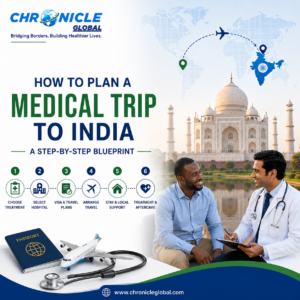
At Chronicle Global, our primary focus is eliminating the structural risks that complicate international medical travel. Operating from our corporate headquarters in Greater Noida, India, we manage every step of the patient journey through our structured 7-Step Medical Model.
[Inquiry & Case Review] ➔ [Fixed Price Commitment] ➔ [Accredited Hospital Match] │ [Bedside Case Manager] ◄── [Priority Intake Routing] ◄── [M-Visa Coordination] │ [Long-Term Telemedicine Network]We protect our patients through two main operational safeguards:
-
The Financial Shield: Through our Zero-Hidden-Cost Promise, we provide complete financial transparency. The written quote formulated during your pre-travel planning phase is exactly what you are invoiced upon discharge, completely isolating your family from unexpected upcharges or surprise fees.
-
The Continuity Shield: During Step 6 and Step 7, your dedicated bedside case manager organizes your complete medical records and helps establish direct telemedicine channels. This ensures your local doctor can collaborate directly with your Indian specialists to support your long-term health back home.
Prioritize your health by choosing a planned, secure care pipeline. Contact Chronicle Global today to receive a vetted, reliable medical travel blueprint.



Add a comment