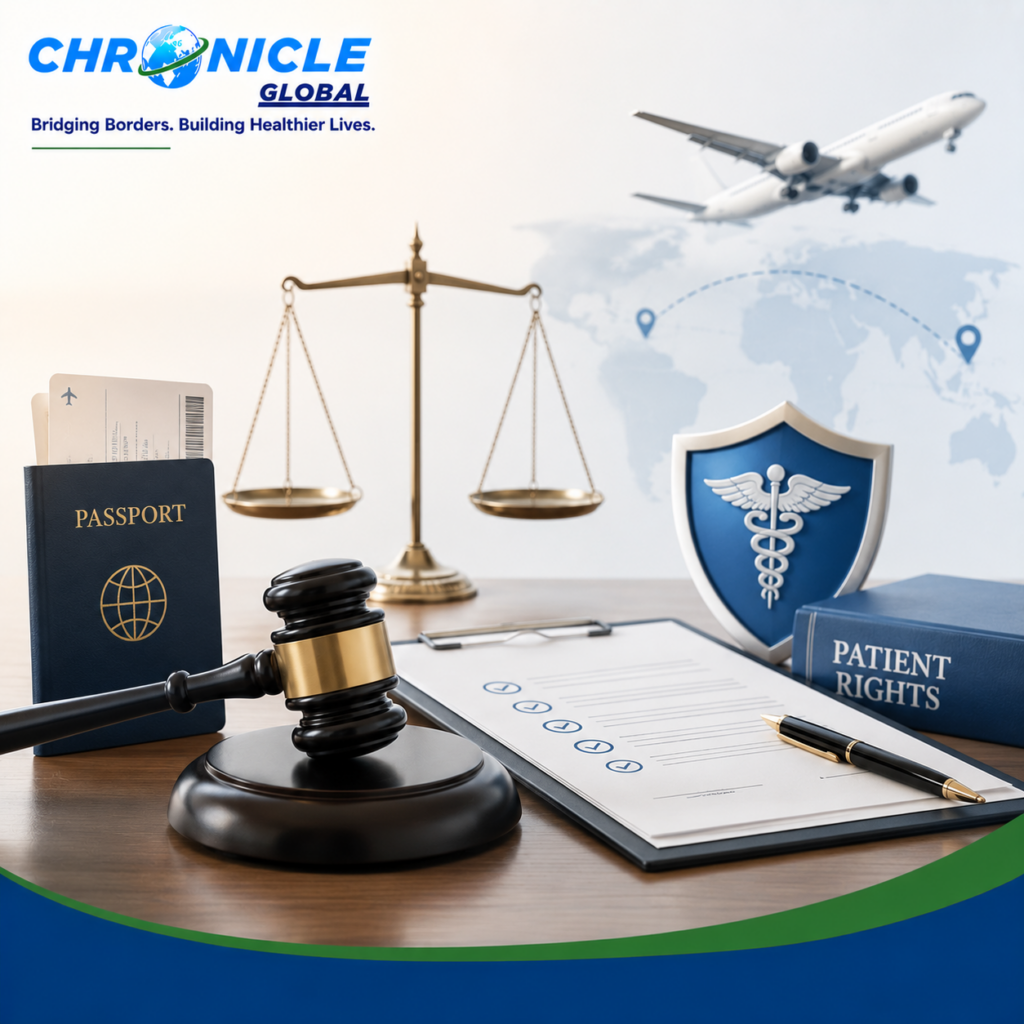
Traveling to a foreign country for advanced surgery or specialized healthcare is a proactive step toward your physical recovery. However, cross-border healthcare involves moving between different legal jurisdictions, healthcare mandates, and patient rights frameworks. For an international patient, understanding the legal requirements of your journey is just as critical as researching your surgeon’s success rates.
Taking the time to understand medical visas, legal consent, and tissue donation laws helps you protect your family and ensure a safe, compliant care journey.
1. The Legal Mandate of the Medical Visa (M-Visa)
The most basic legal rule of medical travel is simple: you must cross borders using the correct visa classification.
[Institutional Invitation Letter] ➔ [Local Doctor Referral] ➔ [Embassy M-Visa Approval]Many patients mistakenly believe they can travel for care on a standard tourist visa or visa-on-arrival path. However, using a tourist visa for planned major surgeries or organ transplants is illegal in major destinations like India and can lead to serious legal complications, including:
-
Refusal of admission by hospital compliance teams.
-
Fines, visa cancellations, or deportation by immigration authorities.
-
The inability to legally extend your stay if your surgical team recommends a longer recovery window.
To ensure compliance, always secure an official Medical Visa (M-Visa) before departure. This requires a formal, stamped visa invitation letter issued directly by an accredited JCI or NABH hospital, alongside a referral note from your local physician.
2. Understanding Informed Consent Across Borders
Before undergoing an invasive procedure, you will be asked to review and sign an Informed Consent Form. This is a legal document that confirms you understand the details of your procedure.
Key Elements of a Valid Consent Process:
Detailed Explanations: The document details the surgical approach, the expected clinical benefits, and all associated risks or potential complications.
Linguistic Verification: You must fully understand the document before signing. If the paperwork is written in English and you prefer another language, your coordinator must provide a certified translator to review every clause with you.
Voluntary Authorization: Your signature confirms that you are choosing to proceed with the treatment voluntarily, with a clear understanding of the care plan.
3. Strict Regulations for Organ and Tissue Transplants
If your medical travel involves a living-donor organ transplant (such as a kidney or liver transplant), you must follow strict regulatory protections. In India, transplants are governed by the Transplantation of Human Organs Act (THOA) to prevent illegal practices.
┌────────────────────────────────────────────────────────┐ │ THOA Transplant Legal Requirements │ └───────────────────────────┬────────────────────────────┘ │ ┌──────────────────┼──────────────────┐ ▼ ▼ ▼ ┌──────────────────┐┌──────────────────┐┌──────────────────┐ │ Close Relatives ││ Verified Legal ││ State Committee │ │ Only (No Strangers││ Relationship Docs││ Review Approval │ └──────────────────┘└──────────────────┘└──────────────────┘-
Family Donor Rule: International patients can only receive organs from a close, living family relative (such as a parent, sibling, child, or spouse) who shares a compatible blood type.
-
Document Verification: You must provide certified government records, birth certificates, and marriage licenses to verify your family relationship.
-
Committee Review: Every transplant case must be reviewed and formally approved by a government-appointed Authorization Committee before any surgical procedures can begin.
How Chronicle Global Protects Your Legal Journey
Navigating foreign medical laws, tracking visa requirements, and verifying regulatory paperwork can be challenging when managing a serious health condition. Chronicle Global handles these legal compliance details through our structured 7-Step Medical Model.
Through our High-Touch Care Shield, we work directly with the compliance departments of elite, accredited networks like Max, Medanta, Fortis, and Apollo to ensure all documentation is processed accurately. We coordinate your official hospital invitation letters, guide you through the M-Visa application, and assign native interpreters fluent in Swahili, French, and Arabic directly to your bedside to translate your consent forms clearly.
Furthermore, our Zero-Hidden-Cost Promise ensures absolute financial integrity. Your upfront quote covers your essential care and baseline logistics, with absolutely no surprise upcharges or hidden fees upon discharge.
Protect your journey by choosing a planned, compliant care pipeline. Contact Chronicle Global today to connect with fully verified, accredited medical networks.
Add a comment