
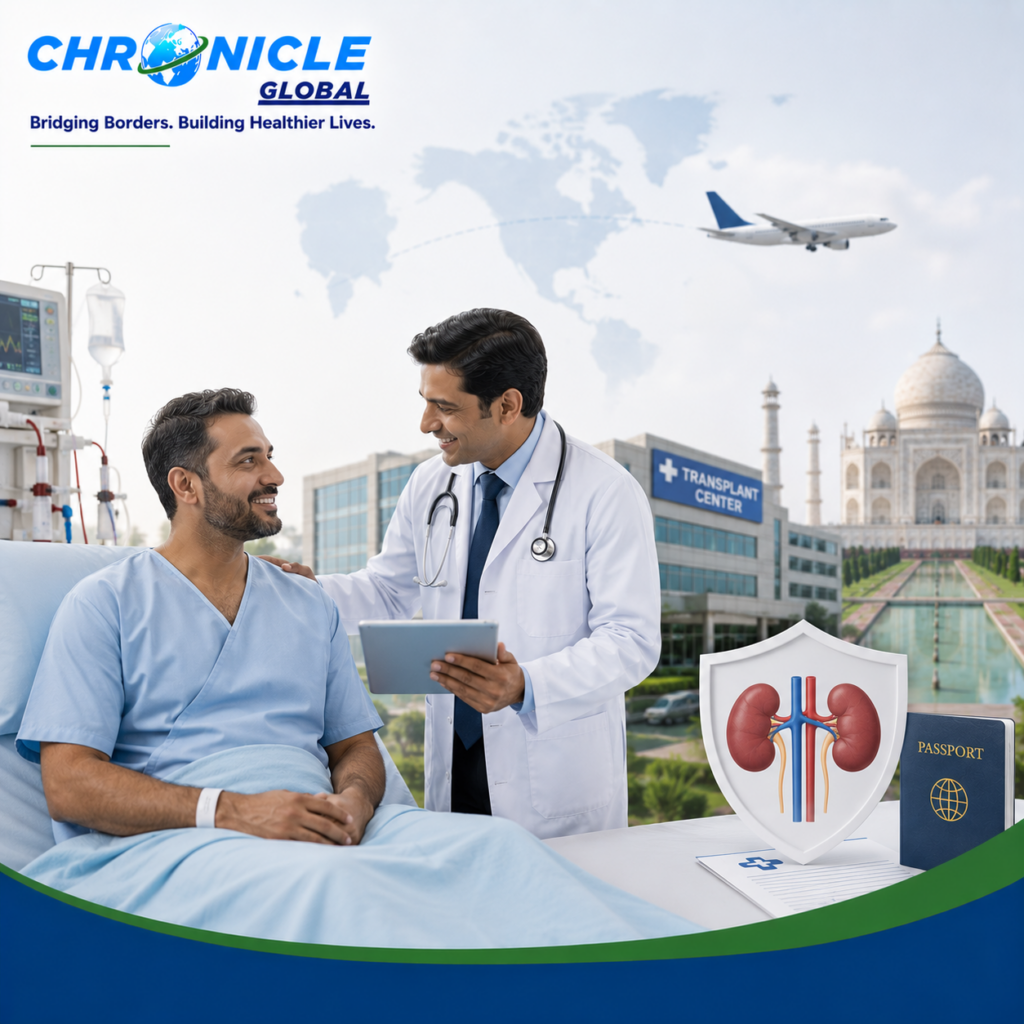
Chronic kidney disease (CKD) progressing to end-stage renal disease (ESRD) significantly impacts your daily health and long-term vitality. When kidneys can no longer filter waste from your blood, long-term dialysis or a kidney transplant becomes necessary to sustain life. A successful kidney transplant offers a reliable path to restore your energy, eliminate your dependence on dialysis machines, and improve your overall quality of life.
For many international families, accessing this specialized care locally can be difficult due to infrastructure shortages or high costs. India has become a leading global destination for advanced kidney transplantations. By combining highly experienced transplant teams with modern intensive care units, top Indian medical centers deliver excellent clinical outcomes within an affordable framework.
Navigating the Legal Framework for International Transplants
International patients traveling to India for a kidney transplant must follow a strict legal process. Organ transplantations are tightly governed by the Transplantation of Human Organs Act (THOA) to ensure the highest ethical standards.
[Identify Close Family Donor] ➔ [Verify Relationship Records] ➔ [Pass Authorization Review]Key legal and clinical criteria include:
-
The Living-Donor Framework: Because international patients cannot join local deceased-donor waitlists, you must travel with a compatible living donor from your own family.
-
Relationship Verification: The donor must be a close relative (such as a spouse, sibling, parent, child, or grandparent) and provide clear, verified government records to prove the family relationship.
-
Authorization Committee Clearance: Before any surgical procedures can begin, the patient and donor must present their case to a formal, government-sanctioned Authorization Committee to confirm full legal compliance.
-
Clinical Compatibility: The donor must be an adult in good overall physical health, with compatible blood type and tissue cross-matching metrics, and possess two healthy kidneys to ensure they can safely donate one.
Comparative Economics: World-Class Surgery at an Affordable Cost
A primary practical advantage of medical travel to India is the significant cost savings on complex procedures. A kidney transplant in India generally costs 75% to 85% less than identical surgeries within private hospital networks in Western countries or the UAE, without compromising clinical quality.
Consider a baseline comparison of average kidney transplant costs:
| Treatment Marketplace | Average Cost Range (USD) | What the Package Typically Includes |
| United States / Europe | $130,000 – $180,000 | Basic surgery and acute hospital bed stay. |
| United Arab Emirates (UAE) | $45,000 – $65,000 | Specialized regional surgical room stay. |
| India (Accredited JCI Networks) | $13,000 – $16,500 | Pre-op donor workup, recipient surgery, and specialized ICU stay. |
The Phased Treatment and Recovery Timeline
┌────────────────────────────────────────────────────────┐ │ Kidney Transplant Recovery Phasing (Weeks) │ └───────────────────────────┬────────────────────────────┘ │ ┌──────────────────┼──────────────────┐ ▼ ▼ ▼ ┌─────────────────┐┌─────────────────┐┌─────────────────┐ │ Hospital / ICU ││ Nearby Lodging ││ Travel Clearance│ │ (1 - 2 Weeks) ││ (3 - 5 Weeks) ││ (At Week 4-6) │ └─────────────────┘└─────────────────┘└─────────────────┘-
Hospital and ICU Phase (Weeks 1–2): The patient and donor undergo surgery simultaneously. The donor is typically discharged safely within 5 to 7 days. The recipient remains in a specialized, sterile isolation room for 10 to 14 days to monitor early kidney function.
-
Local Recovery Phase (Weeks 3–5): The patient is discharged to a close-by hotel or serviced apartment. They attend twice-weekly outpatient checkups to track creatinine levels, monitor fluid balances, and adjust immunosuppressant medications.
-
Fit-to-Fly Clearance (Weeks 4–6): Once your transplant team confirms kidney function is stable, incisions are closed, and immune levels are managed safely, the surgeon issues a formal clearance to travel home.
End-to-End Coordination with Chronicle Global
Managing legal approvals, medical visas, blood compatibility tests, and long-term lodging in a foreign country can be challenging during an organ transplant. Chronicle Global handles these details through our structured 7-Step Journey Model.
Through our High-Touch Care Shield, we partner exclusively with elite, JCI and NABH accredited nephrology networks—including Medanta, Max, Fortis, and Apollo—ensuring you receive care from recognized transplant teams. We arrange specialized close-by accommodations to support your recovery and assign native interpreters fluent in Swahili, French, and Arabic straight to your bedside to keep you and your family informed.
Most importantly, our Zero-Hidden-Cost Promise ensures complete financial transparency. Your upfront quote covers your essential surgical packages, hospital stays, and core logistics, with absolutely no surprise upcharges or hidden fees upon discharge.
Let us help you plan your recovery safely. Contact Chronicle Global today to submit your current medical files for a completely free secondary clinical evaluation from India’s leading transplant directors.



Add a comment