
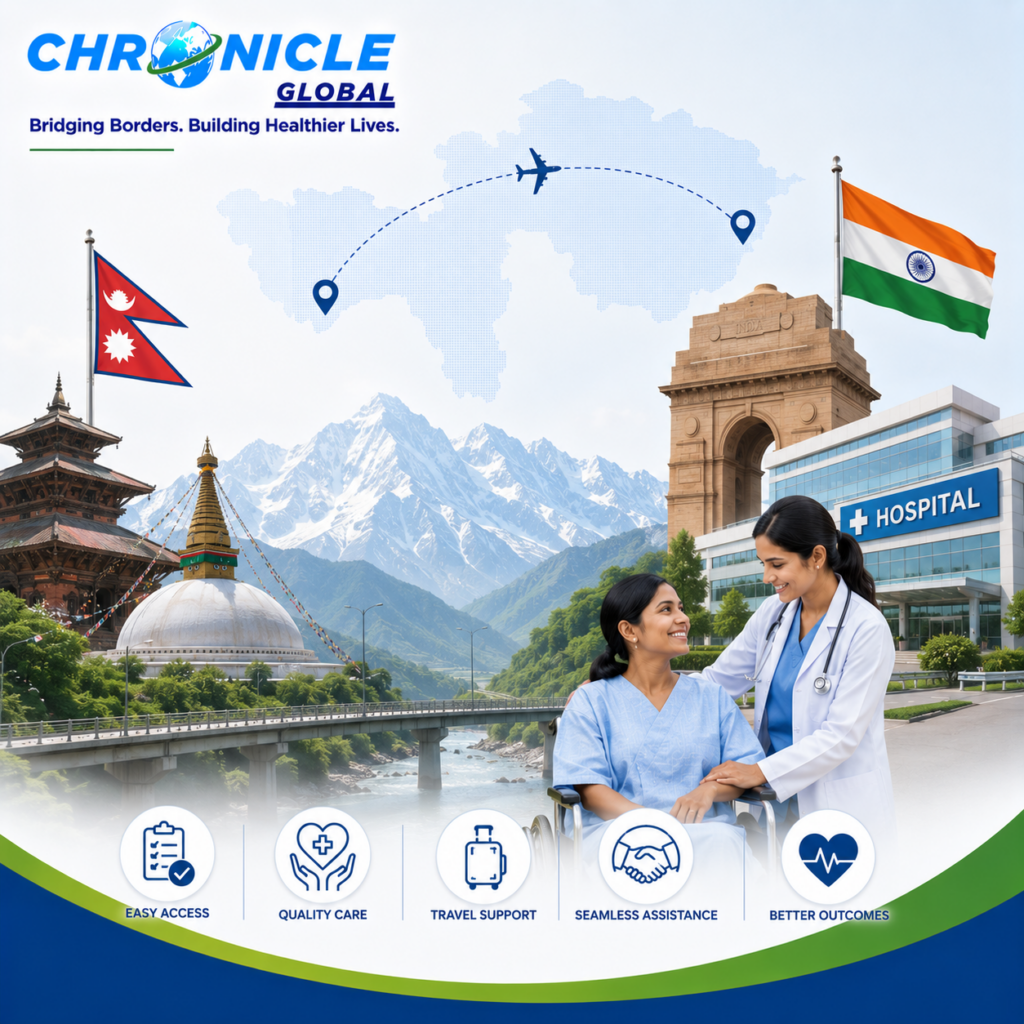
The medical travel pathway from Nepal to India is one of the most well-established healthcare corridors in South Asia. Every year, thousands of patients travel from regions like Kathmandu, Pokhara, and Lalitpur to primary medical centers across India. This movement is driven by a clear goal: accessing advanced tertiary treatments—such as complex neurosurgery, specialized cancer therapies, joint replacements, and interventional cardiology—that may face local capacity limitations or technology deficits.
Because of geographic proximity and shared cultural links, traveling to India for healthcare is a highly practical choice. This comprehensive guide outlines the essential steps to organize a smooth, safe medical journey from Nepal to India.
1. Organizing Your Medical Records for Review
Before booking travel or finalizing travel logistics, you must compile your complete medical history into clear digital files. This allows international specialists to properly evaluate your case.
[Gather Diagnostic Scans] ➔ [Convert to High-Res PDFs] ➔ [Submit for Free Evaluation]Ensure your records folder includes:
-
Recent blood panels, comprehensive biopsy sheets, and recent laboratory profiles.
-
High-resolution imaging files (including CT scans, MRIs, or PET scans) in accessible digital formats.
-
A clear diagnostic summary and referral note from your current treating physician in Nepal.
2. Cross-Border Travel Logistics and Connectivity
One of the primary advantages for Nepalese citizens traveling to India for healthcare is the simplicity of cross-border transit:
-
Aviation Connectivity: Tribhuvan International Airport (KTM) in Kathmandu offers excellent direct flights into major Indian medical hubs, including New Delhi, Mumbai, and Bengaluru, with travel times typically under 3 hours.
-
On-Ground Travel Controls: While citizens of Nepal do not require a traditional passport visa to enter India under standard bilateral treaties, traveling for major institutional surgery requires carrying official government identification (such as a valid passport or citizenship certificate) alongside your formal hospital admission documents to ensure smooth check-in.
Typical Specialty Care Offerings in India
Indian multi-specialty hospital conglomerates operate under strict world-class guidelines, holding active JCI and NABH accreditations. Nepalese patients have immediate access to high-end clinical specialties:
-
Advanced Orthopedics: Robotic-assisted total knee and hip replacements that use precise computer alignment to shorten recovery times.
-
Precision Oncology: Comprehensive cancer care incorporating modern linear accelerators (CyberKnife), targeted immunotherapies, and advanced surgical resections.
DOCX -
Interventional Cardiology: High-volume cardiac labs executing complex angioplasties, open-heart bypasses (CABG), and pediatric heart repairs with high success rates.
DOCX
Frictionless Coordination with Chronicle Global
Managing hospital check-ins, tracking medical files, and organizing recovery lodging in a foreign city can be challenging when dealing with a serious medical diagnosis. Chronicle Global serves as your trusted on-ground partner, managing every step of your trip through our structured 7-Step Journey Model:
[1. Inquiry & File Review] ➔ [2. All-Inclusive Quote] ➔ [3. JCI Hospital Match] │ [6. Managed Lodging Stay] ◄── [5. Priority Intake] ◄── [4. Transport Sync] │ [7. Return Telemedicine Support]We protect our patients through our core operational standards:
-
The Financial Shield: Through our Zero-Hidden-Cost Promise, we ensure complete financial transparency. The fixed quote formulated before you leave Nepal is exactly what you are invoiced upon hospital discharge, completely isolating your family from unexpected upcharges or surprise fees.
DOCX+ 1 -
The Concierge Shield: From the moment you land in India, our team handles all logistics. We arrange airport transfers, manage priority hospital check-ins to bypass long wait times, and provide comfortable lodging close to your hospital campus.
DOCX -
Care Continuity: Following your treatment in India, we establish direct electronic documentation and online telemedicine links, allowing your Indian specialists to collaborate with your primary doctor in Nepal to support your long-term health.
DOCX
Do not let treatment delays or diagnostic limitations compromise your recovery. Contact Chronicle Global today to submit your medical files for a completely free secondary clinical evaluation from India’s top specialists.
Add a comment